The 60-20-20 Rule is a strategic framework for managing engineering resources. It recommends allocating:
- 60% of time to building new features (New Things)
- 20% to improving existing features (Improve Things)
- 20% to internal scaling and productivity (Productivity) including technical debt reduction, tooling improvements, and process optimization
A key part of this strategy is managing the Keep the Lights On (KTLO) category, which should remain as small as possible to prevent maintenance and operational tasks from consuming valuable development capacity.
This guide explains how to use the Engineering Investment feature and its filters to implement, track, and refine your 60-20-20 balance across teams.
Step 1: Analyze the Current Task Allocation
- How:Start by reviewing the Engineering Investment report over a 90-day period to see how your team’s time is currently divided across categories. Use the bar chart to observe the percentage of tasks allocated.
- What to look for:Compare your current breakdown with the 60-20-20 Rule. Ideally, 60% of tasks should be focused on New Things, 20% on Improve Things, and 20% on Productivity. The KTLO category should remain as small as possible to avoid maintenance tasks overwhelming new development.
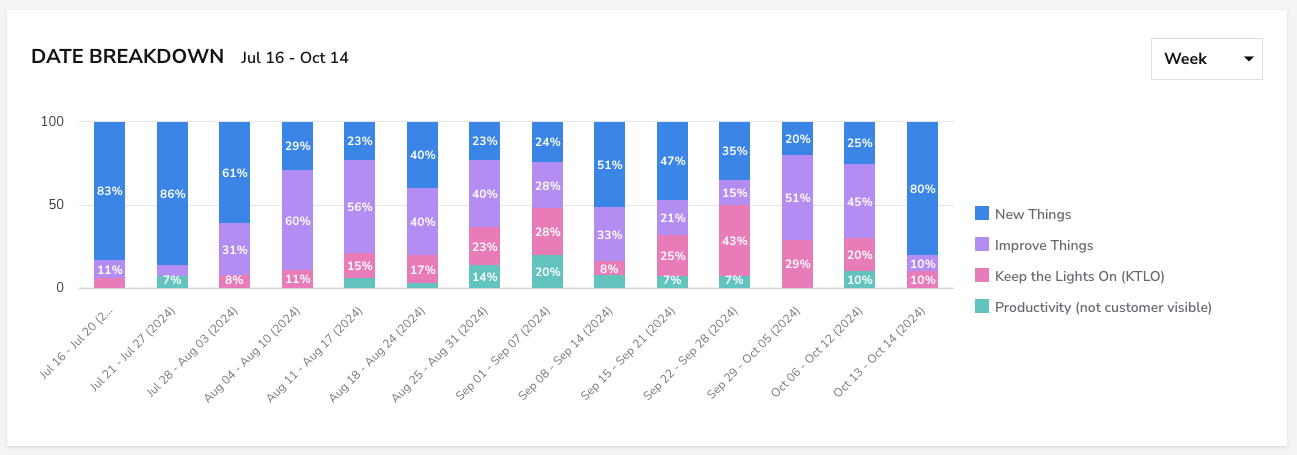
Step 2: Use Filters to Identify Misaligned Teams
- How:Use the Squad or Players filters to narrow the view to specific teams or individuals. This helps identify deviations from the ideal balance.
- What to look for:- Teams spending a high percentage on KTLO (suggesting maintenance overload)
- Teams over-indexed on improvements with little time for new development
- Squads with no time invested in Productivity, indicating technical debt may be accumulating
📊 Example Insight: If Team A spends 40% on KTLO and only 35% on New Things, they might need to offload maintenance or revisit prioritization.
Step 3: Adjust Priorities for Teams Out of Sync
Once you’ve identified misaligned teams, schedule short alignment sessions to redefine priorities. Encourage Product and Tech Leads to rebalance the workload according to the 60-20-20 goal.
What to do next:- Review investment trends monthly or quarterly to ensure ongoing alignment.
- Use comparison views (e.g., current vs. previous quarter) to visualize improvement.
- Celebrate teams that consistently maintain a healthy distribution, reinforcing data-driven discipline.
Outcome
By continuously monitoring Engineering Investment through the 60-20-20 lens, leaders can:
- Keep KTLO under control
- Ensure strategic balance between innovation and stability
- Maximize the impact of engineering time and resources